Uzbekistan Trip. Day 2: Tashkent to Bukhara
 When I was searching for attractions in Tashkent, its metro station was at the top of the list. Built during the USSR era, each metro station was ornate with different themes designed by prominent architects and artists of Uzbekistan. It was recommended to view the spectacular design of the metro station, now being permitted to take pictures inside since 2018.
Back to our trip, the journey started and ended in the Uzbek capital of Tashkent. With the first day in Uzbekistan pretty much exhausted with travelling, exploring Tashkent was mostly on the final two days.
Uzbekistan Airways HY 053 bound to Bukhara at 8.20 am. So we woke up at 4 am, and an early breakfast had been prepared as requested by our tour leader, Mr. Zulfekar. Nu'man by that time has recovered and is fully recharged. We were excited to visit the historical city of Bukhara. Around 6:30 am, we checked in for the 2-hour flight.
From the Bukhara airport, we hopped on the chartered bus to the Ismail Samonids Mausoleum. At first, my wife and I were quizzed as to why the bus parked at a lively fair area. The mausoleum is actually located within the Samonids recreation park. We had to walk down to one of the oldest funerary buildings, built in the 10th century. We were told that the building was half buried and then found by a Russian archaeologist in 1976. The building features medieval Islamic architecture, comprising the weaving bricks technique and an innovative circular dome, believed to be influenced by Persian and Central Asian architecture.
Not far from the mausoleum, there were several art shops selling handicrafts made from brass, ranging from plates and vases to smaller items. Mr. Ilham advised that when it comes to souvenirs such as this, it is better to get them at Tashkent. But Bukhara and Samarkand are the best for their dried fruits and peanuts.


Then we continued further down to the second mausoleum. While the previous mausoleum was meant for the Ismail Dynasty, who ruled the area from 900 to 1000, the Chashma-Ayub Mausoleum symbolized the legend in which Ayub visited this place and made a well by striking the ground with his staff.
The National Bazaar is located just beside the mausoleum. The bazaar sells everything from daily needs to household items. Going further inside, it's the best place to find dried fruits, peanuts, and salads. We bought apricot seeds sold for SOM 32,000 per kg, or around RM 14, a good bargain!
It's about lunchtime; Mr. Ilham took us to a shashlik restaurant called Chinor Cafe, about a 20-minute drive away. It's actually a kebab restaurant. Well, we had sumptuous beef and lamb kebab. It tastes so juicy and well marinated and comes together with, of course, the naan bread!
We headed back to the hotel in the late afternoon. Mr. Ilham has made a promise to bring us for dinner at his parent's house, a thing that he has never done since he became a tourist guide. But that night, his wife and his mother have prepared plov for us, a popular dish in Central Asia. We were wondering how his parents' house can fit around 35 people in our group.


 |
| A photo of the Chashma-Ayub Mausoleum |
 |
| An architectural building using weaving bricks techniques |
 |
| Me'morlik Yodgorligi Ismoil Samoniy Maqbarasi... :-P |
 |
| The bigger dome supported with smaller domes |
 |
| An airy big window |
 |
| Standing on diagonal corner |


Then we continued further down to the second mausoleum. While the previous mausoleum was meant for the Ismail Dynasty, who ruled the area from 900 to 1000, the Chashma-Ayub Mausoleum symbolized the legend in which Ayub visited this place and made a well by striking the ground with his staff.
 |
| The Samanids Recreation Park during winter |
 |
| Everything was brown... |
 |
| Nice photo shoot taken by Nu'man |
 |
| The well is said to exert pure water and considered healing |
 |
 |
| The tomb of Ayub |
 |
| Glazed bowl believed to be from the 15th-16th century |
 |
| Chashma-Ayub Mausoleum has been added to the UNESCO World Heritage on January 2018 |
 |
| One of the National Bazaar Entrance |
 |
| Varieties of dried fruits... |
 |
| fresh salads... |
 |
| apricot seeds... |
 |
| peanuts... |
 |
| more peanuts... |
 |
| ...and Bukhara breads! |
 |
| Fresh fruits section. |
 |
| Selamat membeli belah! (after translated using Google!) |
 |
| Back side of the Chashma-Ayub Mausoleum |
 |
 |
| Each person get a beef and lamb shashlik |
 |
| They do sell their bread. |
 |
| The kitchen. |
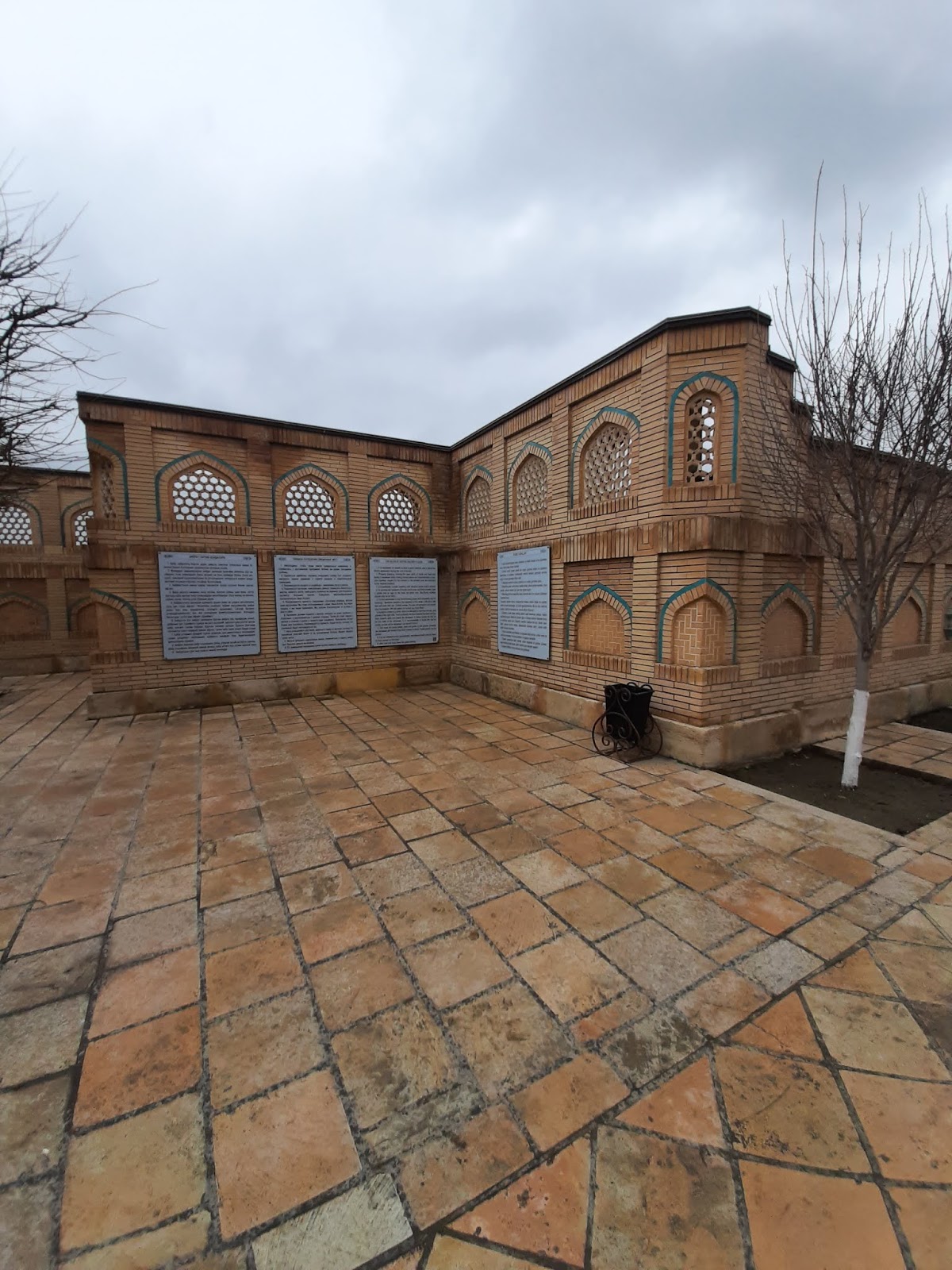
Near Bukhara, 12 km away, is the Bahauddin Naqshbandi Memorial Complex, to remember the founder of a Sufi order that was named in his honor. His philosophy resonated with many influential figures in the East. Mr. Ilham mentioned that the current government doesn't allow any ritual prayers made around the tomb.
 |
| In 15th century, Khan Abd al-Aziz built over his grave the crypt and surrounding buildings |
 |
 |
 |
 |
| A newly constructed ceiling that replicates the old design |
 |
| The tomb of Bahauddin Naqshbandi |
 |
| Wooden columns at the central courtyard |
 |
 |
| It is said that the Sheikh will distribute honey |
 |
| A blend of traditional and modern window |
 |
| The prayer times in Bukhara |
 |
 |
| Mmmm... Nu'man dah jadi anak bujang |
 |
| Once it was place of settlement of Kasri Arifon, the Pagan |
When we reached the house, it was actually still being renovated, and it's a new house with a big lawn area (it doesn't turn green in winter). To our surprise, there is a quite spacious courtyard in the middle of the house. We were being separated into two rooms, one group in the dining area and the other in the kitchen. And even more surprised, we were served with varieties of dishes, peanuts, crackers, samosas, and fruits! We were so full that night...
 |
| Plov is being prepared. |
 |
| Varieties of dishes... |


hari kedua dah shopping :D
ReplyDeleteikut itinerary je kan..
Delete